
No products in the cart.
- Sep, Wed, 2026

Understanding Data Wiping Services: Ensuring Secure Data Erasure

What is Data Wiping?
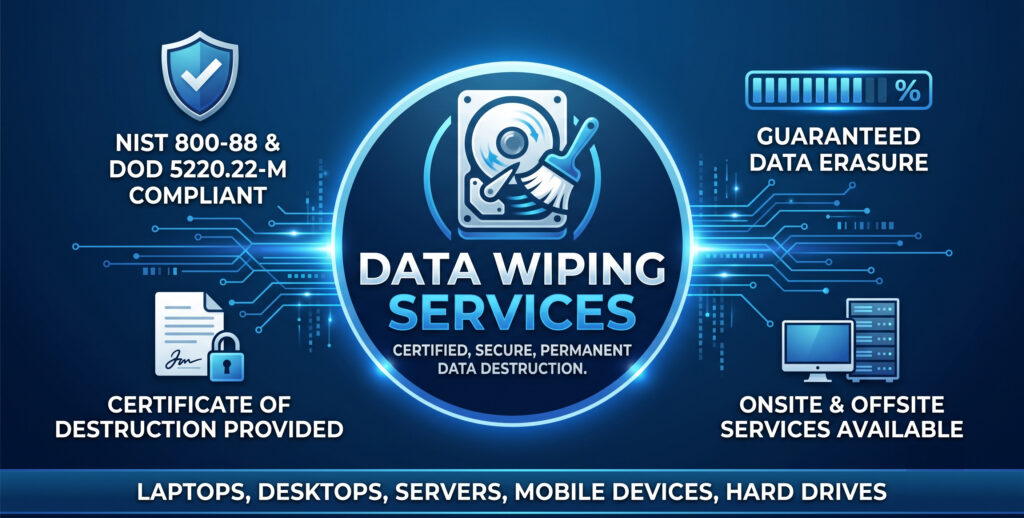
Data wiping is a systematic process aimed at ensuring that data stored on digital devices is irretrievably deleted. Unlike simple data deletion, which may merely remove pointers to the data, data wiping involves overwriting the actual data on the storage medium. This process is critical in safeguarding sensitive information from unauthorized retrieval, particularly during the disposal or repurposing of electronic devices.
The primary difference between data deletion and data wiping lies in the permanence of the action. When files are deleted, they often remain on the hard drive until new data is written over them. Skilled data recovery professionals can recover these supposedly deleted files using specialized tools. In contrast, data wiping utilizes various methods to overwrite this data thoroughly, making recovery attempts practically impossible.
There are several established methods employed in data wiping. One common technique involves overwriting existing data with a series of zeroes and ones, which is repeated multiple times to ensure completeness. This method significantly reduces the likelihood of recovering the overwritten information. Additionally, specialized software known as data shredders can be utilized to automate this process, applying multiple overwriting algorithms to exceed industry standards for secure data elimination.
For utmost security, some organizations may opt for the physical destruction of storage media. This method includes shredding, crushing, or melting hard drives, thereby guaranteeing that the data contained within cannot be accessed or recreated. While this approach can be more costly and time-consuming, it is often preferred in cases where data sensitivity is paramount.
In summary, data wiping is an essential procedure that transcends mere data deletion, employing various methods to ensure that sensitive information is completely and permanently removed. By understanding the intricacies of data wiping, individuals and organizations can better protect themselves against potential data breaches and maintain confidentiality in an increasingly digital landscape.
Importance of Data Wiping Services
Data wiping services play a crucial role in today’s digital landscape, where both individuals and businesses are increasingly vulnerable to data breaches and identity theft. These services offer a reliable method for ensuring that sensitive information stored on devices is irretrievable and that potential leaks are prevented. With the rapid advancement of technology, relying on just deletion methods is no longer sufficient, as data can often be recovered from seemingly erased devices.
The implications of improper data disposal can be severe. In numerous cases, companies have faced financial penalties, legal issues, and irreparable reputational damage due to data breaches that stemmed from inadequate data wiping procedures. For example, a prominent accounting firm recently experienced a significant data leak when old equipment containing clients’ personal information was sold without proper cleaning. This incident highlights the need for businesses to prioritize secure data erasure as part of their risk management strategies.
Moreover, individuals are not exempt from the risks associated with data breaches. Consumers often underestimate the amount of sensitive information retained on personal devices, such as smartphones and laptops. A case in point involved an individual who unknowingly sold their laptop, which still contained unpublished writings and personal data, leading to identity theft and financial loss. The necessity of utilizing professional data wiping services cannot be overstated.
Ultimately, engaging with a competent data wiping provider ensures that both individuals and corporations are safeguarding their information against unauthorized access. The correct disposal of devices holding sensitive data is not just a precaution; it is essential in the current climate where data privacy threats are prevalent. Understanding the importance of data wiping services is the first step in mitigating risks associated with data security.
Choosing a Reliable Data Wiping Service Provider
Selecting a trustworthy data wiping service provider is a critical step in ensuring the secure erasure of sensitive information. Given the increasing number of data breaches and the importance of compliance with data protection regulations, businesses must thoroughly evaluate potential providers. One of the first steps in this evaluation is to check for relevant certifications. A reputable data wiping service should possess certifications demonstrating adherence to international data erasure standards, such as those established by the National Institute of Standards and Technology (NIST) or the International Organization for Standardization (ISO).
Another vital factor to consider is the methods employed by the service provider. Various data wiping techniques exist, ranging from simple overwrites to more complex, multi-pass data destruction methods that render data irrecoverable. Inquire about the specific methods used and whether they align with the standards required for your industry. This information is crucial, as some techniques might not meet stringent compliance requirements, potentially putting your organization at risk.
Compliance with data protection regulations is another critical aspect when choosing a data wiping service. Ensure that the provider understands and complies with applicable laws, including the General Data Protection Regulation (GDPR) if operating within or with the European Union. Engaging with a service that has a strong awareness of regulatory requirements can help mitigate legal risks associated with data handling.
Additionally, it is essential to ask potential providers specific questions about their processes. Inquire about how they verify successful data erasure and what documentation they provide upon completion of the service. Understanding their audit trails and policies regarding data handling after erasure can also provide insights into their overall reliability. Finally, do not underestimate the importance of conducting thorough research and reading reviews from other clients. Gathering this information can help ensure that you make an informed decision when selecting a data wiping service provider.
Best Practices for Data Wiping
Data wiping is an essential practice for both individuals and organizations aiming to protect sensitive information and maintain data privacy. Implementing effective data wiping strategies can significantly reduce the risk of unauthorized access to confidential data. To ensure comprehensive data erasure, several best practices should be followed.
First and foremost, establishing a routine schedule for data wiping is crucial. Individuals and organizations should regularly assess their data management policies and set up a timetable for data erasure. This could be done quarterly, semi-annually, or annually, depending on the volume and sensitivity of the data being handled. Regular data wiping helps to ensure that older data does not remain vulnerable to potential breaches.
Keeping detailed records of all data erasure activities is another best practice that cannot be overlooked. Documenting each instance of data wiping provides a clear audit trail that can be invaluable in case of compliance audits or investigations. This record should include the date of wiping, the method used, and any devices that were involved. By maintaining such records, it becomes easier to demonstrate adherence to data protection regulations and policies.
Furthermore, verifying that data has been successfully wiped is vital in ensuring that sensitive information is completely unrecoverable. After performing data erasure, organizations should conduct verification protocols, such as using specialized software designed to confirm that data remnants do not exist on the storage media. This step ensures that the data wiping process was effective and that no information can be retrieved by unauthorized individuals.
Incorporating these best practices into a comprehensive data management strategy can greatly enhance data security and privacy. Regular data wiping schedules, meticulous record-keeping, and rigorous verification processes work together to create a robust approach to protecting sensitive information from potential risks associated with data breaches. Following these guidelines will equip individuals and organizations to confidently manage their data with the assurance of secure data erasure.